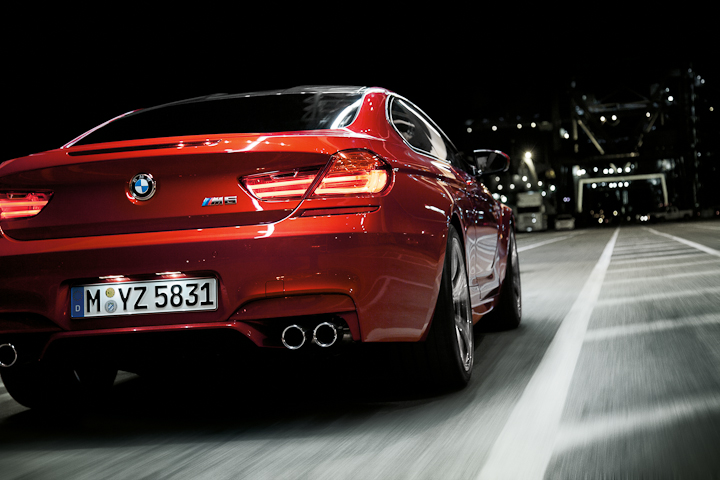
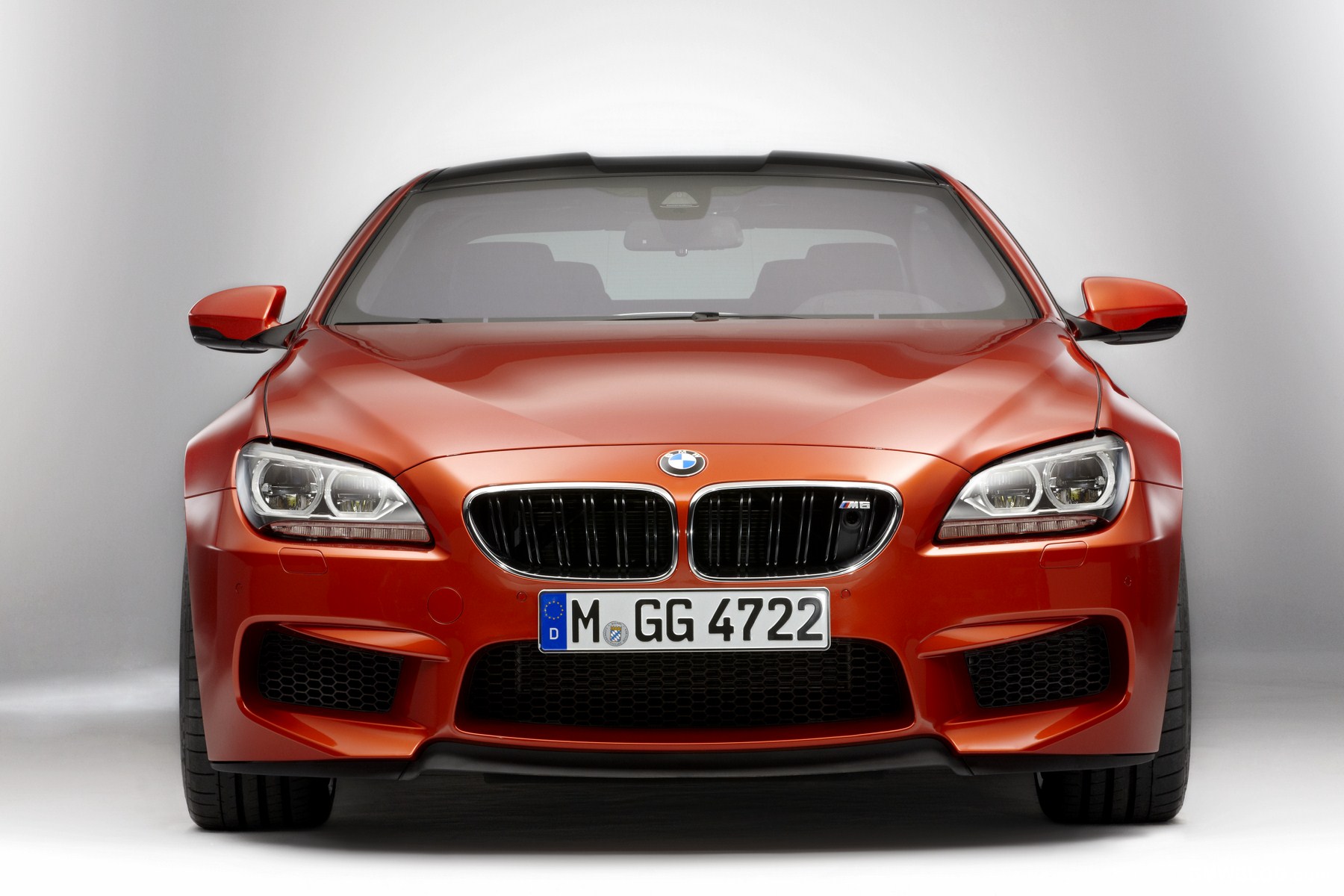
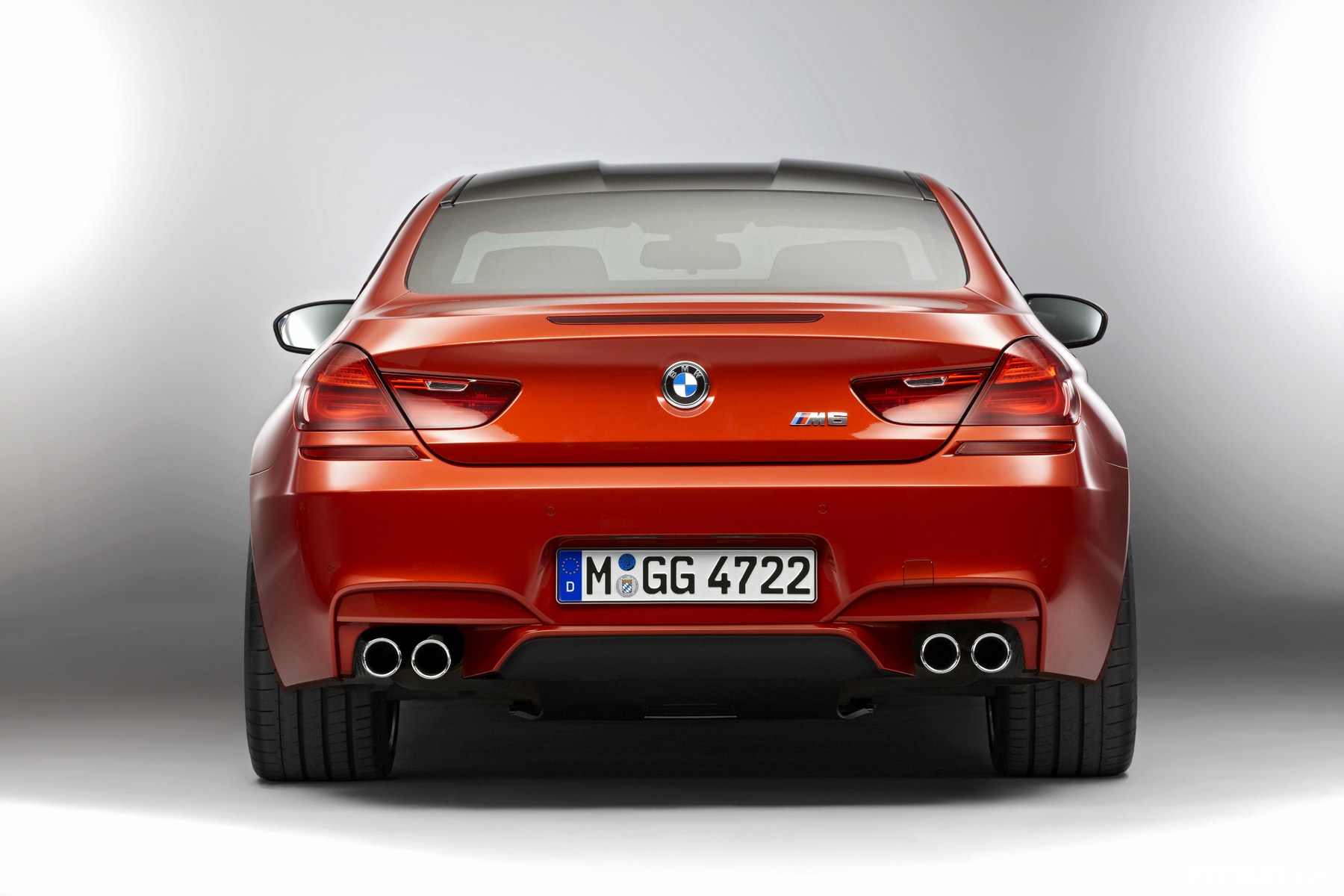
http://www.bmwblog.com/2012/08/24/bmwblog-road-review-2013-bmw-m6-coupe/ When was the last time you saw an M6 on the street? Unless your neighbor owns one or you have one in your driveway, it’s likely been some time – if you’ve ever seen one. The M6 is not a sports car for everyone. Its price and mission isolate most potential buyers, rendering it an exclusive sports car for those who drink 12 year and up.
It all started back in 1983. BMW launched a new M car based on the 6 Series, as a premium model within the stable. A proper grand tourer, it was comfortable and spacious on long trips while 50:50 balance and gobs of power gave it sports car moves, almost. Almost, because the 6 Series has never been lithe, light and focused. It’s always been a mixed bag of leather, tech, comfort and sport: a compromise. An ideal compromise for most, mind you, if you can open your wallet and have enough left for your mortgage and fuel, which it drinks a lot of.
After a 15 year hiatus, the 6 Series came back in E63, E64 form. Both of these cars impressed with their vicious F1 inspired V10 engines, while providing a similar level of comfort and luxury to the original E24 model M6. Another 3 year hiatus has passed, and once again BMW have launched an M6 model to sit at the top of the M family. “From outside of the car the noise is loud and glorious”
The new 6 Series upon which the new F12 M6 is based is a brilliant car. It is a car that hides its size and weight better than nearly any other car on the market. Of course, it’s missing that zing, that special touch and focused aggression that M enthusiasts long for. If you fancy a track day every few weeks, you’ll want something with a wild side. Meet the 6 Series’ alter-ego brother; the angry one who throws things and tends to talk too loud.
It’s no secret that BMWs are softening. That’s not necessarily to say that they are less dynamically competent – they’re not, in fact every model currently in production is quicker than its predecessor. But with each new generation, BMWs are less intimate. They whisper less in your ear, tingle your fingertips less on the wheel, and grab your backside a little less. Flying into Monterey, I wasn’t sure what to expect of BMW’s latest M car. Does it connect you intimately to the road, or isolate you from it in the name of comfort or perhaps efficiency? We drove the new M6 to find out.
To the Hills.
BMW invited us to test the M6’s metal around the challenging and storied Laguna Seca circuit after enjoying a drive along California back roads at leisure. Knowing the brilliance of BMW’s M5, I was certainly optimistic.
My optimism was vindicated not long after pressing the dashboard mounted ‘Start’ button. The M6 clears its throat when woken up, grumbling and rumbling until it settles into a harmonic hum at idle. From outside of the car the noise is loud and glorious, audible enough to turn heads within a 50 foot radius. From inside the car, the exhaust note is muted just enough so as not to be annoying over longer trips, quiet enough to allow for relaxed conversation at speed. The exhaust system seems louder than that of the M5.
Out of the parking lot I programmed the M6 to its most relaxed settings; my first goal was to measure this car’s daily-driving competence. With the ZF sourced 7-speed dual clutch transmission (DCT) left in automatic mode, the M6 smoothly rolls forward at parking lot speeds, slipping the clutch a good measure. This may waste more clutch pad than a human left foot, but the resulting engine noise and silky smooth modulation is in no way a bad thing. If you’re attempting to sneak away from the house for midnight blasts you’d be better off waiting for the truly stealth i8.
Those who are unlikely to use the DCT’s manual mode will be satisfied with its automated performance. The only thing differentiating this transmission in automatic mode from a true slush-box is engine revs and subsequent noise at low speeds. The DCT achieves superior fuel milage, as a benefit over a competitive automatic. Speaking of fuel mileage, if driven with restraint the M6 will return EPA figures of 20 and 14 city and highway, respectively. “Less experienced drivers will appreciate MDM mode during track days…”
There are four parameters that can be tuned for comfort or sport. The steering feel and weight, suspension damping, engine and transmission aggression, and finally the traction control can all be adjusted independently to your mood and the road or track you’re driving on.
We’ve established that the transmission and engine combo are up to par with the highest standards of daily driving comfort and ease, but what of the suspension? The M6 rewards with a supple, smooth drive over rough roads, only translating the larger bumps and undulations into the chassis. With its shorter wheelbase and lighter weight, the M6 is less comfortable than the M5 over similarly rough roads, but still delivers excellent levels of damping.
The hydraulic steering assist in the M6 delivers plenty of information to your fingertips, if a bit muted in comfort mode. The steering tends to give you greater amounts of info the harder you push, allowing you to the find the limit quickly and safely. We’d still prefer a little more raw, gritty steering feel from the tires to our hands as found in previous renditions of the M6.
Traction control is flawless, I wouldn’t change a thing. When left in full nanny mode, you simply can’t put a tire wrong, no matter how clumsily you attempt to unleash all 500 lb-ft of torque. Those with a hankering for spirited drives will appreciate M dynamic mode (MDM) which allows for a good amount of wheel-spin and yaw before taking the reigns. You cannot drift the car in MDM mode, but you can manage mild slides before system intervention, enough to put a smile on your face. Less experienced drivers will appreciate MDM mode during track days, particularly wet track days, as 500 ft-lbs is a lot to manage.
Without a doubt, California offers some of the best driving roads in the country. I soon found myself carving a narrow strip of asphalt, ascending up a mountainside. Even with comfort settings in use, the M6 feels agile and balanced. Turn in is clean and immediate, corner exits brisk, pulling strongly. You can’t take the ‘M’ out of this M6.
I encourage automotive extremism. The middle settings ring of mediocrity: not too comfortable, not too sporty. Throw everything into sport plus and be amazed. The M6 exhibits one of the most drastic personality changes in the industry. Its sporty comfort is transformed into sport – full stop.
Now growling and edgy, the chassis begs to be pressed and pushed while the engine searches for revs and the transmission shifts with aggression. Like its four-door sibling, the M5, this car will get you in trouble with the local PD. The programmable speed warning chime (goes “Bing!” once you’ve reached a pre-set speed) is a close friend who’s advice should be embraced at all times. “You can’t take the ‘M’ out of this M6.”
After you’ve gotten your jollies from the M button, you can press “M2″ and throw the comfort presets back into the system. Why not turn up the incredible Bang and Olufsen sound system? This sound system is one of the best I’ve ever experienced in a road car, it has crisp highs and tight, clean lows: the commensurate high fidelity sound system. Luxurious, yet sporty.
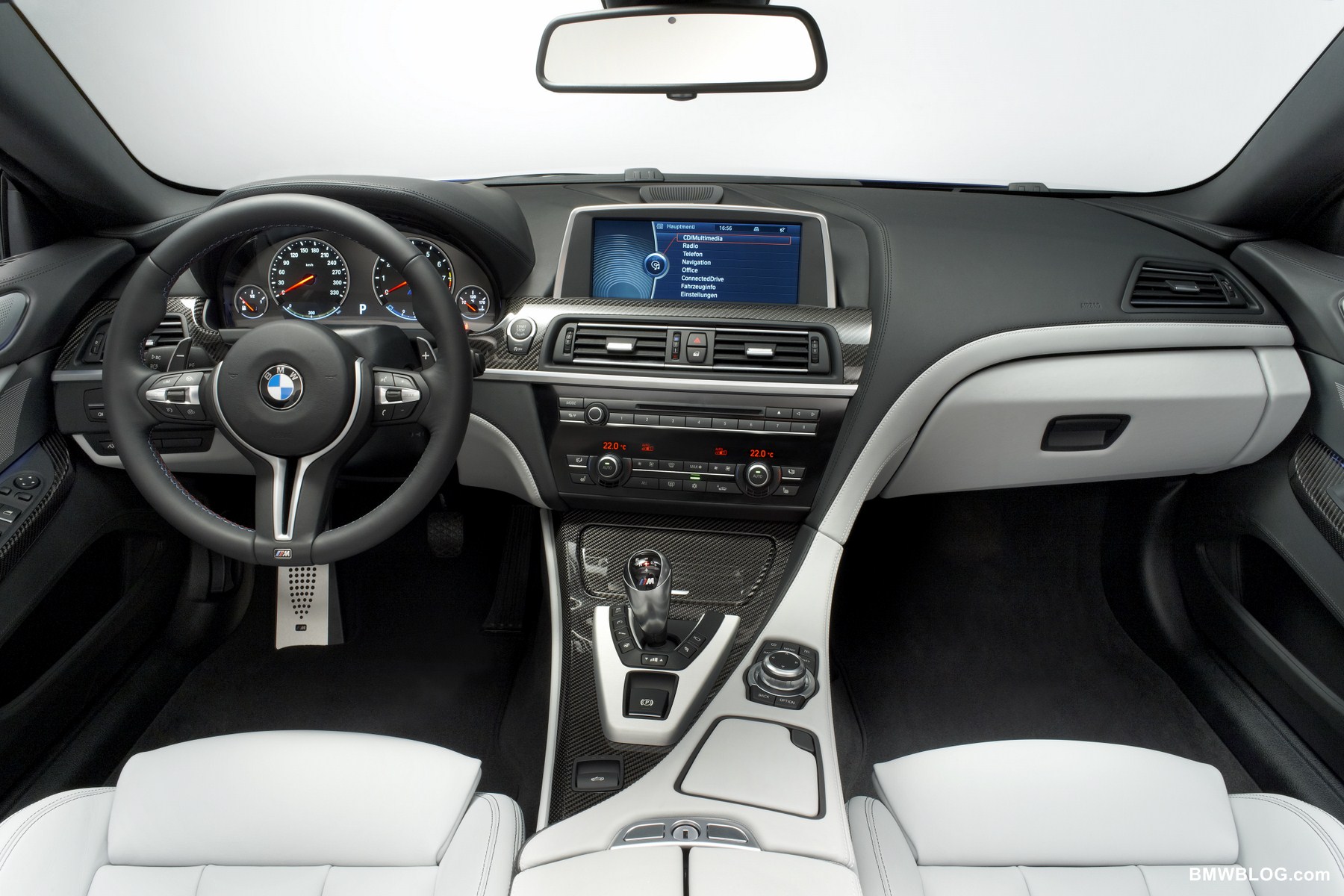
While relaxing in the cabin you’ll also appreciate the beauty and craftsmanship of the interior. When you’re frequently surrounded by a gold standard, it can be hard to recognize the standard as gold. I’ve always appreciated the functionality and form-follows-function design of BMW interiors since the company’s inception. But after driving a V12 Vantage and spending some time sitting in the new Vanquish – I have a new appreciation for BMW’s interior quality. Aston Martin claim that second to Rolls-Royce, no car has as much hand-assembly involved in the production process. I would never have guessed. The Aston’s seats, dash and doors are beautifully crafted, but the center control column is made of plastics that look cheap and feel cheaper – barely a step above a base model GM car. When you press the buttons, they click like a child’s toy instead of offering up a positive feeling of engagement at your finger tips. They’re also a forensic officer’s dream as every finger laid upon the dash leaves a perfect fingerprint behind.
Not so in the BMW. At roughly 1/3 the price, the M6 presents a gorgeous interior, flowing with rich layers of leathers, metals and high quality plastics. When you press a button it says, “thank you Mr. Molnar” instead of offering up a cheap “Click.”
And what of the ‘special quotient’? This car feels amply special, from start button to steering wheel. Unlike the Aston which left me thinking the price-tag is steep, the M6 rewards in so many ways it leaves you with a feeling of value – not that its price tag is any more accessible for it.
As it typical of most 2+2s, the M6 offers a tight fit for adult rear passengers, though far more spacious than competitors from Porsche, Aston Martin and others. Driver and front passenger room, however, is ample; the car feels large without feeling bulky. Storage room is also vast, with a large rear trunk swallowing up suitcases, groceries and golf bags with ease. “…the M6 presents a gorgeous interior…”
At $106,995 USD the M6 find itself in the company of very stiff competition from the likes of the Porsche 911, Aston Martin Vantage, Mercedes SL, Audi R8 and if you stretch your imagination a little further, a few others.
Is the M6 a worthy competitor to the above cars on your wish list? Only a track test can tell: standby for BMWBLOG’s M6 racetrack review from Laguna Seca.
You have read this article BMW /
BMW M6 Coupe
with the title BMW M6 Coupe. You can bookmark this page URL https://emill-emil.blogspot.com/2012/08/bmwblog-road-review-2013-bmw-m6-coupe.html. Thanks!
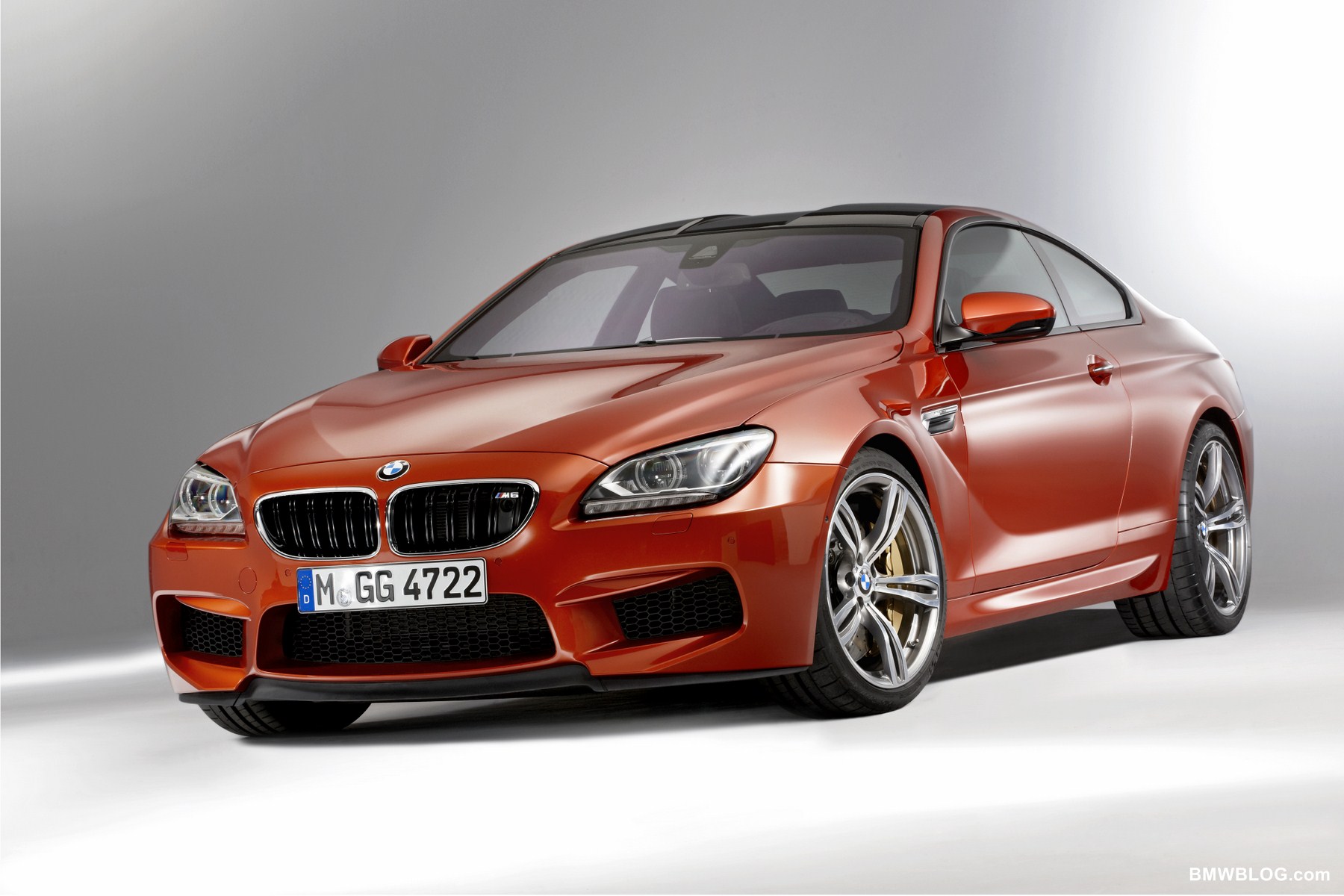
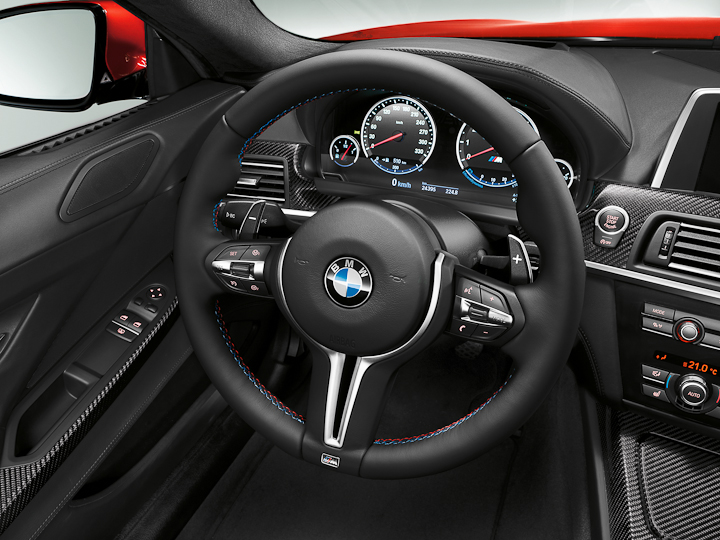
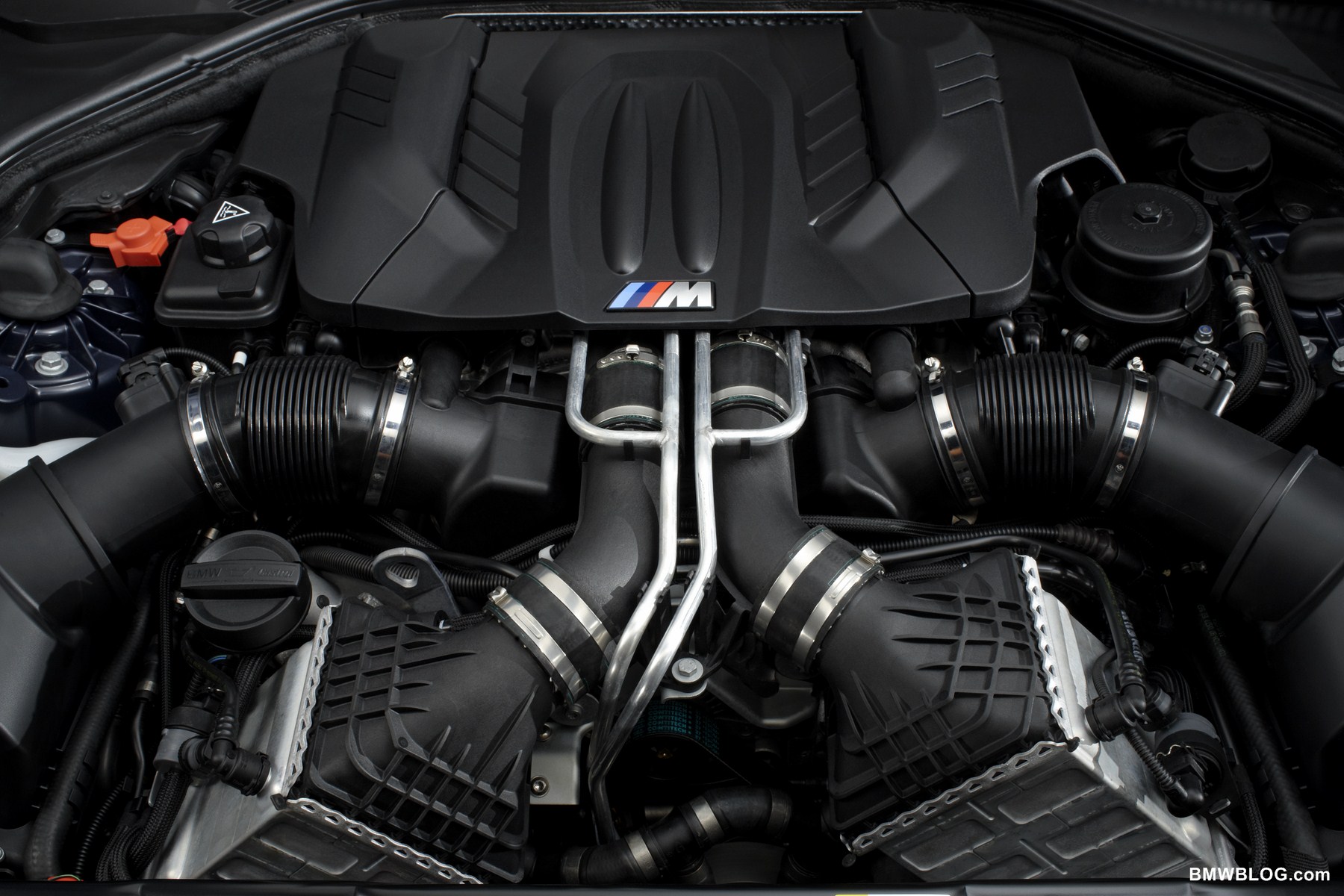
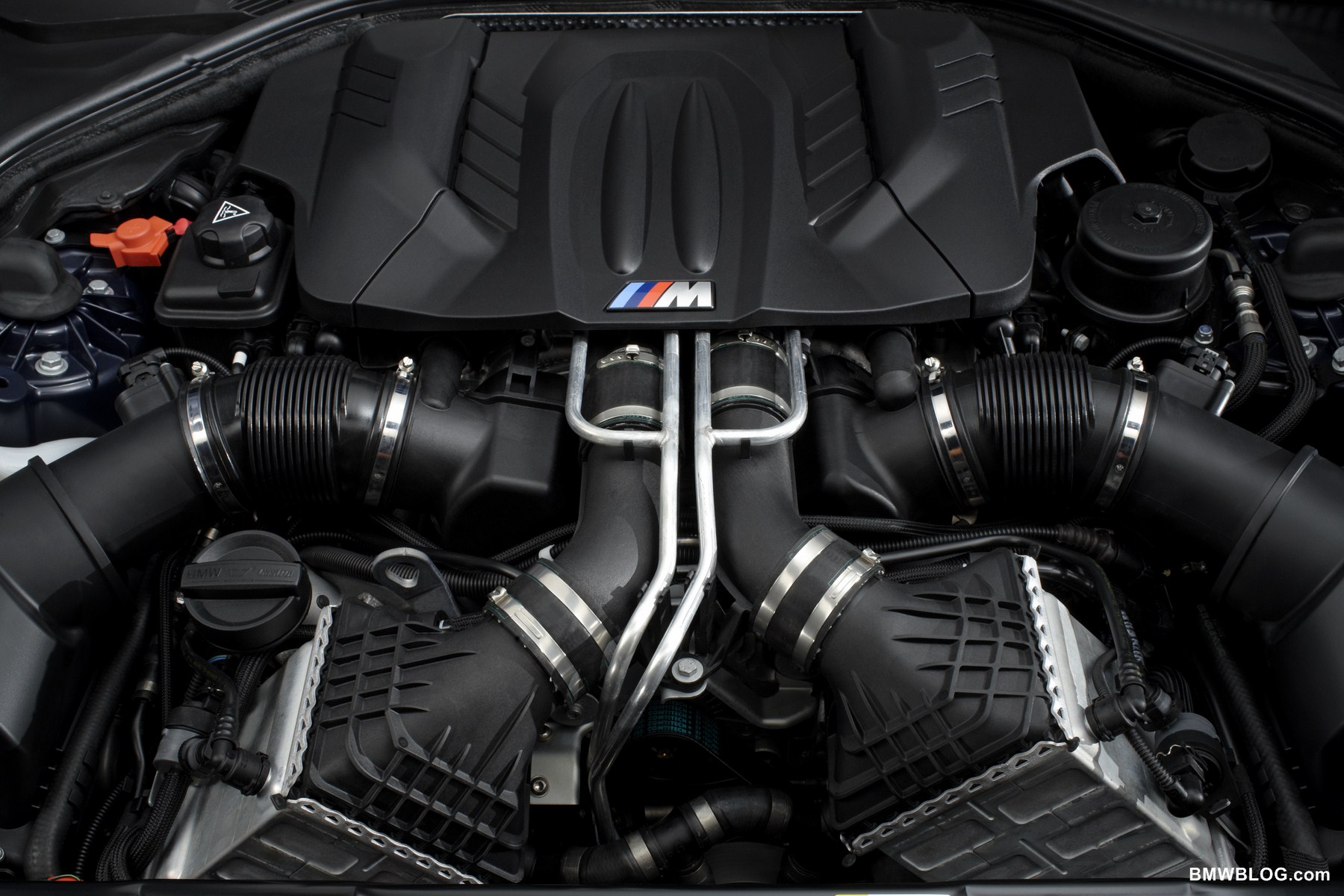
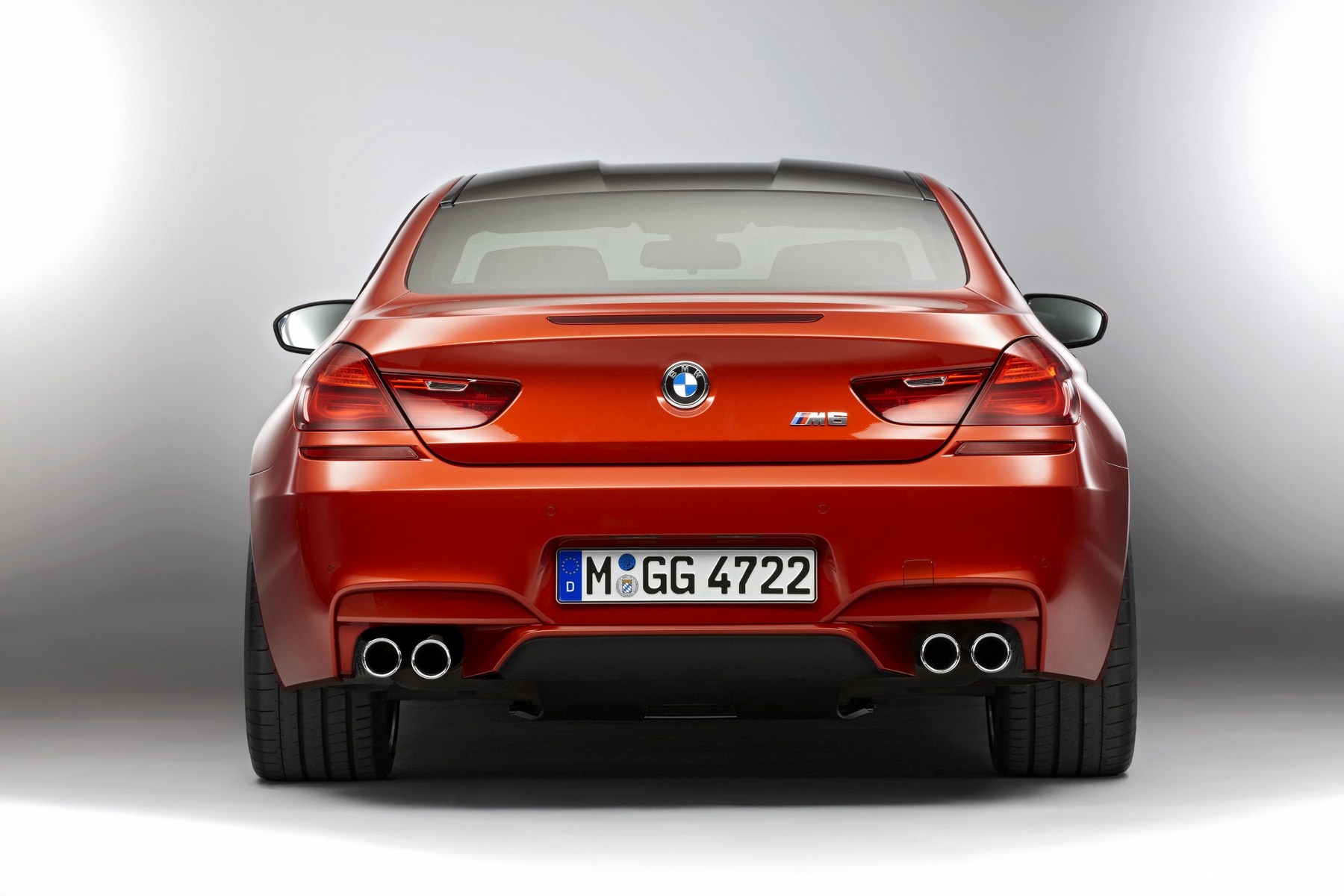
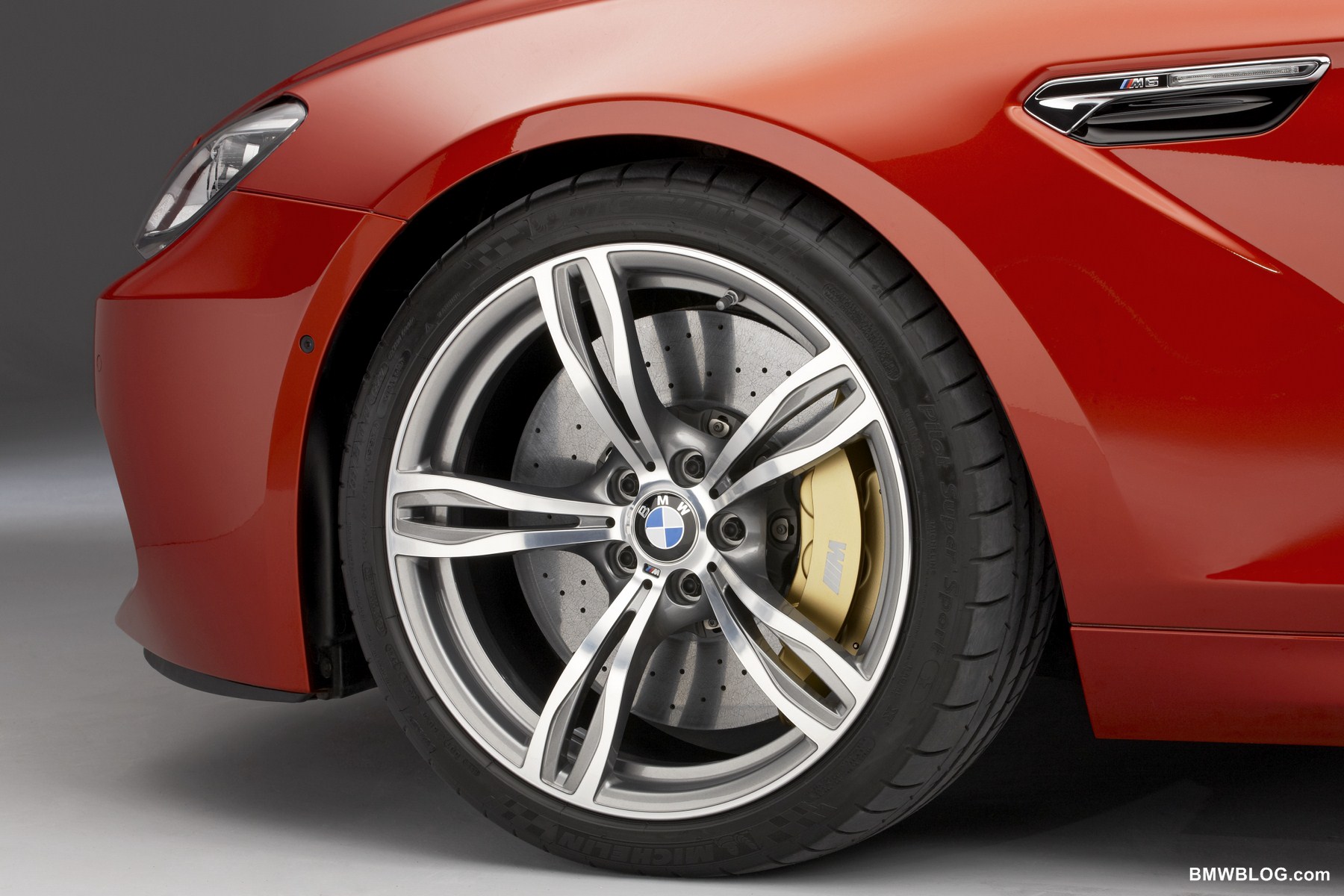
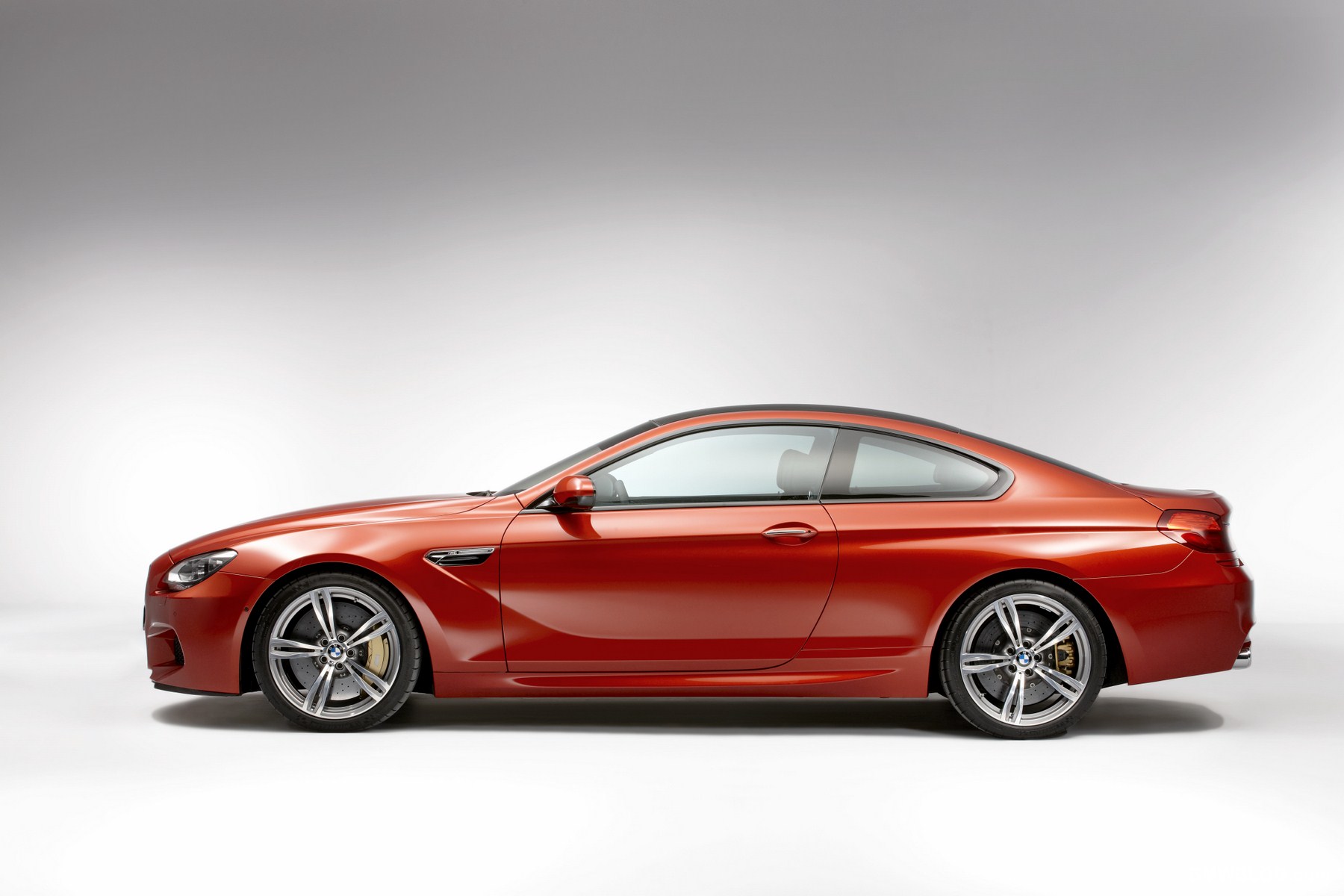
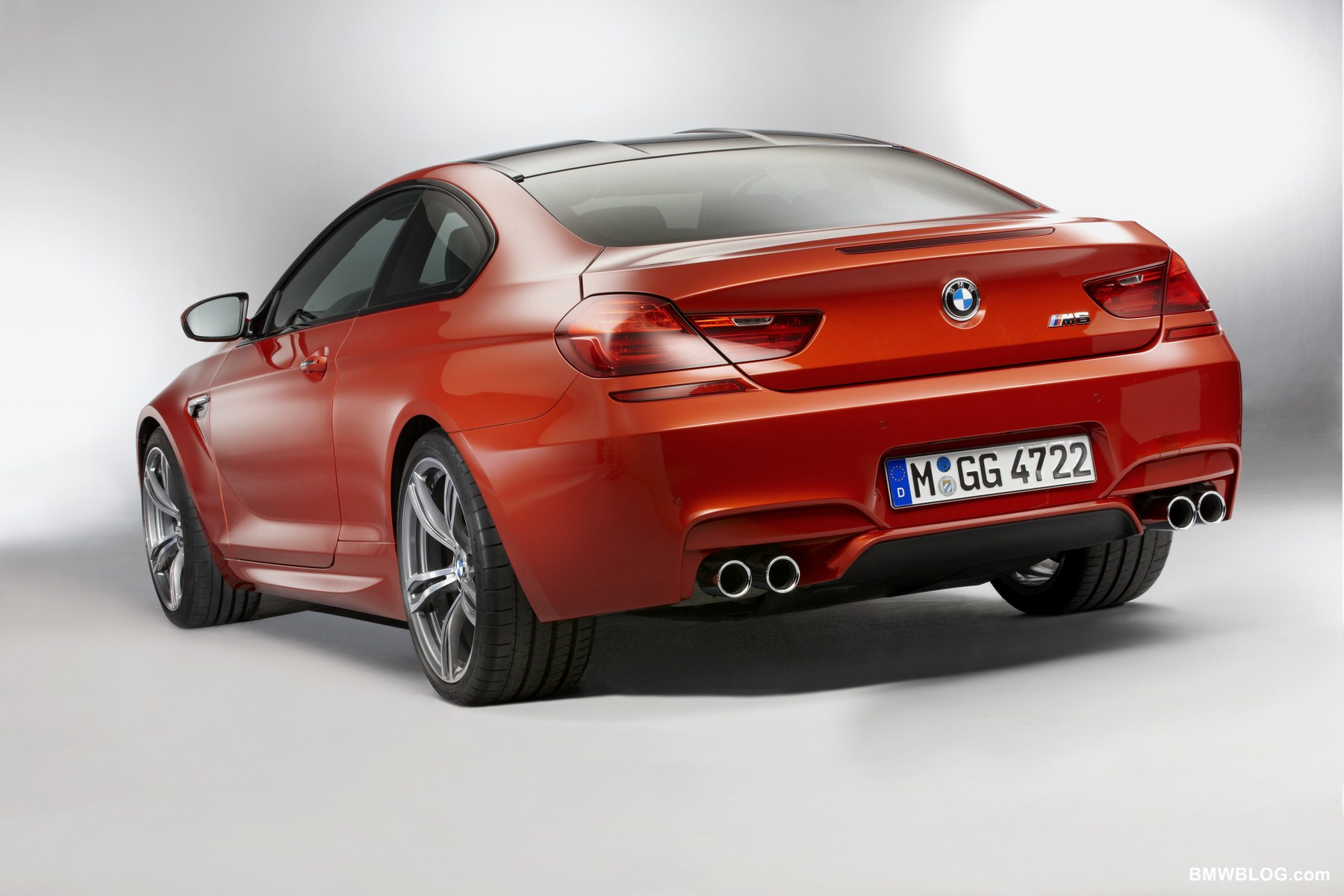
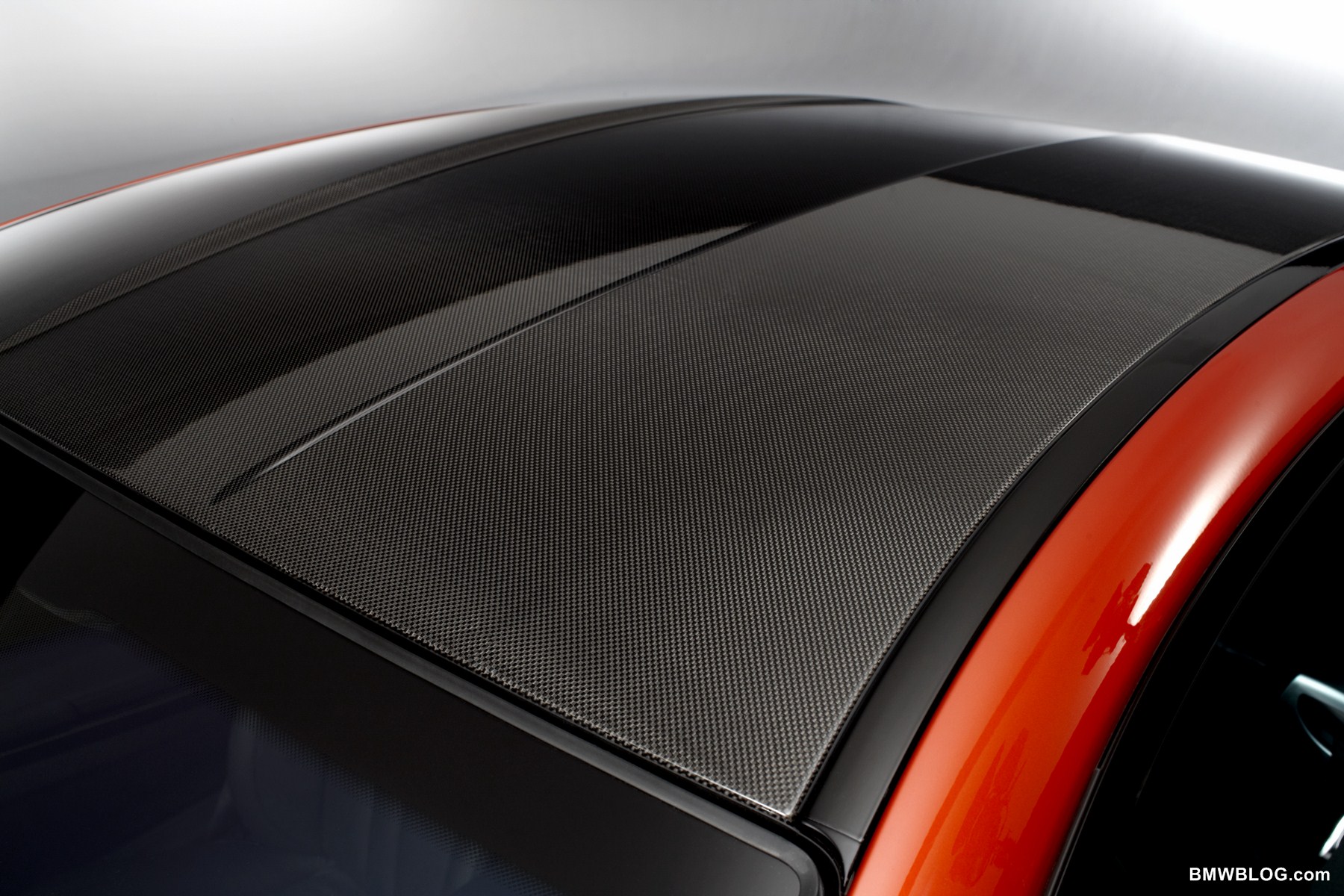
In well-worn M philosophy, the chassis must always be faster than the engine. For decades this has been an engineering challenge for M, because they’ve always fitted stonking engines under the hood. To go the wayward American route of fitting massive power in a shell that can only go (quickly) in a straight line was never an option. Hence, the magic of an M car has always been found in its chassis, and embellished by its engine. Since the move to turbocharged engines, M has never had a more daunting task whist designing the chassis and suspension. The new turbo M engines are, frankly, monsters. They are so powerful and torquey that they require stronger transmissions than ever to handle the twist. If you “stay in it” while accelerating you will soon arrive at speeds you’ve likely never driven – and by soon I mean a handful of extra seconds. M has developed a standard approach to taking BMW cars from super to sublime. It always starts with spreading the wheels apart at all four corners for a wider track. In the case of the new M6, the track has jumped 30 mm (1.2 inches). This wider stance serves the driver by lowering the center of gravity, improving turn in, road holding, and agility. With the wheels now protruding from the wheel wells by another half an inch, they must be covered up by bulging metal work, lending the car its subtle but seriously muscular look. Like a confident kick-boxer in a fitted suit, it says: “don’t mess with me.” The wider track is only the beginning of the story – in fact the new M5 and M6 share few chassis and suspension parts with their generic cousins. For instance, the rear sub-frame bushings of the 5 and 6 series cars have been eliminated, the engineers instead opting to bolt the rear sub-frame directly to the chassis. This setup was previously reserved for thorough-bred race cars, but to increase feeling through the driver’s seat and response from input to action, the M5 and M6 have crossed into unprecedentedly racy territory. Besides new suspension kinematics, the suspension components themselves are made of forged aluminum to lower weight and increase strength. The chassis now contains more high-strength and ultra-high strength steel (meaning less can be used, thus saving weight). The wheels are also lightened, with slick forged alloy 20” rims on option, and for the first time ever on a mass-production BMW, the M6 will feature optional carbon fiber ceramic brake discs, saving a massive 19.4 kg(42.8 lbs) from the vehicle weight. Critically, the wheels, suspension components and brakes are all part of the ‘unsprung mass’ meaning they articulate up and down with the road surface. Lightening a car is always a great idea, but lightening unsprung mass is brilliant as it allows the tires to maintain better contact with the road surface – ultimately offering more consistent grip for the chassis to work with. Also ‘adding lightness’ – to borrow a page from the late Collin Chapman – are aluminum doors, thermo-plastic front fenders and front fascia, an aluminum hood, carbon fiber roof, and fiber-glass trunk lid. M has gone to great lengths to lighten the M6 as much as possible, resulting in a final curb weight of 4,088 lbs for the coupe, and 4,312 lbs for the cabriolet. While 4,000 + lbs is a lot of heft to muscle around on the racetrack, we expect the finely tuned chassis and suspension to compensate well with massive grip. Consider that the M3 weighs 3,704 lbs, and the weight of the M6 quickly becomes impressive given its much larger footprint and endless luxury. In a nod to quick reflexes and agility, the steering wheel has been shrunken, now feeling more responsive in your hands. The brand new M steering wheel also sports a slick design, mimicking the split-spoke wheels surrounding you. Should you dial in a lot of steering lock and get heavy on the throttle, the active M differential lock will electronically modulate the multi-plate diff from 0 to 100% lockup. Off-throttle the diff opens quickly and completely to prevent unwanted off-throttle yaw (and the bushes). Now about that engine. Identical to the unit found in the recently released M5, it is, as earlier mentioned, a fire breathing monster. We had hoped for a slight boost in the horsepower figure for bragging rights only, but the truth of the matter is adding lightness will go much further on the track than adding power. After driving the M5 to the very limits of its abilities on track at Ascari, the last thing I wanted was more power – rather stickier tires and less weight. To get a rough idea of how the M6 will perform, head over to our M5 track analysis from Ascari, then imagine the M6 just a little more dynamic in every respect. The 4.4 liter V8 has two turbos, each turbo with two scrolls (the snail-shell structure that gathers hot exhaust gasses, increasing their velocity and channeling them onto the turbine inside the turbo). This effectively allows the M6 to breathe as if it had 4 turbos, two large and two small. Internally codenamed the S63tu, this engine features a “hot V” layout, meaning the turbos are stuffed between the two banks of cylinders. This offers numerous advantages, namely allowing a shorter distance between the exhaust valves and turbo turbines, greatly reducing lag. In addition, M has developed a unique cross-bank manifold that pairs two cylinders together, one from each opposing bank. Based on the firing order, the end result is that each turbo gets a pulse from the engine every 90’ of crankshaft rotation, each scroll gets a pulse every 180’. For a more in-depth look at BMW turbo design, hit the jump. The M6 will also feature “Valvetronic” valvetrain, replacing individual throttle bodies higher up stream. This too will add to the responsiveness and immediacy of the turbo engine. The M6 will spin out 560 hp steady from 5,750 rpm to 7,000 rpm. Torque output measures 500 lb-ft flat from 1,500 rpm to 5,750 rpm. The engine goes on to redline at 7,200 rpm – and with a powerband that gets serious below 3,000 rpm, this redline feels plenty high from behind the wheel. All of this power will reproducibly hurl the M6 towards 100 km/h in a factory claimed 4.2 seconds using launch control. As we’ve seen with the M5, the factory acceleration figures generally err on the conservative side, and we are laying bets that the big magazines will find 60 in 3.7 seconds. BMW have once again built an exciting M car with tasteful details that throw back to M heritage – the M6 badge on the grill is a personal favorite. From the first photos we’ve seen, the M6 already looks like a classic as it embodies so much character from its M6 forebears. We can’t wait to get behind the wheel of the new M6, unleashing it where it’s most at home: on the racetrack. We can promise not only stunning photos of the M6 drifting through corners at speed, but also video coverage – soon-to-be standard with BMWBLOG drive reviews. Stay tuned for full coverage of the M6 at BMWBLOG.com. The iconic M6 returns from a two year hiatus more powerful, more athletic, more focused, more luxurious and more efficient than ever before. Since the “M6” badge was first placed on a BMW back in 1987, this iconic model has exemplified the luxury and daily usability of a top range BMW coupe combined with true super-car performance. Now, in its 3rd generation, the all-new BMW M6 will again be offered as a 4-seat Coupe and Convertible. The new 2012 BMW M6 Convertible will be the first to arrive in US BMW Center showrooms in June 2012. The BMW M6 Coupe will arrive at US BMW Centers in the late Summer of 2012 as a 2013 model. US Pricing, technical specification, EPA mileage ratings, standard and optional equipment will be announced closer to the on-sale date. Like its sedan brother the M5, the new M6 models are high-performance sports cars whose exceptional dynamic potential is geared squarely towards the demands of track use. At the same time, the M6 sets new benchmarks in daily driving comfort, innovative features and fuel efficiency. In order to achieve these lofty performance goals, the new BMW M6 Coupe and Convertible share the most powerful engine ever fitted in a series-produced model from BMW M GmbH mated to a high-torque 7-speed M-Double Clutch Transmission (M-DCT). An innovative Active M Differential which optimizes power transfer between the rear wheels. This drivetrain, combined with extensive chassis and suspension upgrades ensure that the engine’s performance can be transferred to the ground. The engine: High-Revving V8 Engine with M TwinPower Turbo Technology. The new engine shared by the BMW M5 and M6 has the highest output ever generated by a BMW M car, and at the same time provides the most efficient balance between performance and fuel consumption. It is characterized by immediate throttle response, a linear power band and an unusually high and flat torque curve. The new engine produces around 10% higher output than the V10 engine of its predecessors and torque is up by over 30%. At the same time, fuel consumption and CO2 are expected to be reduced by approximately 30%. To achieve the performance levels demanded by the M6, the engineers at BMW M started with the proven BMW M developed V8 engine from the BMW X5 M – X6 M (internally known as the S63) and further developed it for its duty in the latest M5 and M6 models. Internally designated as the S63Tü this new engine uses similar M Twin Power technology combined with the reverse flow V8 layout. The result is that the high-revving V8 engine with M TwinPower Turbo Technology lends a whole new intensity to the powerful thrust at higher rev ranges for which M cars are known. The 4.4-liter engine develops a peak output of 560 hp (412 kW) at 5,750 – 7,000 rpm (versus 555 hp at 6,000 rpm for the S63), while its maximum torque of 500 lb-ft (680 Nm) is on tap between 1,500 and 5,750 rpm (versus 500 lb-ft from 1,500 to 5650 rpm for the S63). The rev limiter intervenes at 7,200 rpm (up 200 rpm from the S63 engine). The rev band, which offers extremely dynamic acceleration between peak torque and the availability of maximum output, is therefore almost three times as wide as that of the V10 engine in the previous generation M6. As in the V-8 engine of the X5 M, the two twin-scroll turbochargers are placed (along with the catalytic converters) in the V-space between the two cylinder banks in a reverse flow layout. This layout results in an unusually compact engine where the intake is moved outboard and the exhaust inboard – the opposite of conventional V-engines. The lengths of intake and exhaust tracts are thereby reduced and their diameters increased, reducing pressure losses – especially on the exhaust side. A further advantage of the layout is the short distance between the cylinders’ combustion chambers and the primary catalytic converters; this leads to quicker warm-up of the catalysts after the engine is started and therefore lower start-up emissions. The patented cross-bank exhaust manifold, first introduced in the S63 engine of the X5 M is also employed in the S63Tü. This exhaust manifold is a special 8-into-4 setup that combines the exhaust from two cylinders (on opposite banks) that are 360˚ of crankshaft rotation apart from each other. Each of the eight runners is of identical length to ensure perfectly regular timing of exhaust gas pulses. Each of the four manifold outlets is fed into each of the four available scrolls of the two twin-scroll turbochargers. The two scrolls of a twin-scroll turbo lead each exhaust pulse directly to the turbine without feedback or interference from the other scroll (that are fed by cylinders at other points in the combustion process). Additionally, dividing the gases into two smaller paths (scrolls) results in higher gas velocity than a single larger path. This enhances the turbocharger’s response thereby reducing lag. The crossover manifold is configured so that the second scroll of the turbo is fed by two cylinders that are 180˚ out of phase with the first scroll. In this way each turbocharger receives distinct exhaust pulses every 180˚ of crankshaft rotation (from one of four cylinders). Furthermore, the two turbos receive exhaust pulses that are 90˚ offset from each other. The result is that throttle response is sharpened and turbo lag is reduced to a minimum. The new engine also sports larger intake runners, larger air to liquid intercoolers and a tuned exhaust which results in the engine making power more quickly than previously possible. Finally, the S63Tü uses a maximum boost pressure of 1.5 bar (21.7 psi) versus 1.2 bar (17.4 psi) for the S63 engine. BMW’s efficient High Precision direct fuel injection also plays a major role in this engine’s combination of high performance and fuel efficiency. High Precision direct fuel injection ensures an extremely precise supply of fuel to the combustion chambers. Injectors positioned centrally between the valves within immediate range of the spark plugs spray the fuel into the combustion chambers with maximum pressure of 200 bar (nearly 3000 psi), providing smooth and clean combustion. Innovative solenoid valve injectors in the new BMW M6 engine use multiple injections per combustion cycle to achieve an extremely precise mixture preparation. The fuel also has a cooling effect on the combustion that allowed the M engineers to endow the engine with a high compression ratio of 10:1. This high compression ratio contributes to both performance and efficiency, while reducing exhaust emissions – and even has a positive effect on engine sound. Throughout its history, the heart of the BMW M5 and M6 has been its high-revving, high output-per-liter engine fed by individual throttle plates. The new engine introduces VALVETRONIC variable valve control system to a BMW M engine – effectively providing 16 individual throttles. VALVETRONIC is BMW’s patented fully variable valve control system that eliminates the need for conventional throttles. Engine power is instead controlled directly by varying the amount of lift of the intake valves. Pumping losses are minimized with this system and resulting in efficiency and torque improvements. VALVETRONIC has also sharpened the responsiveness of this engine compared to the V10 engine it replaces. The M TwinPower Technology of the new V8 engine also includes BMW’s Double VANOS infinitely-variable valve timing system which optimizes the engine’s efficiency and generates high torque at low engine revs. In addition, a volume-controlled oil pump and a range of other EfficientDynamics measures deliver an extra boost to efficiency. The new BMW M6 features both Brake Energy Regeneration and the Auto Start-Stop function, which automatically switches off the engine when the car comes to a stop. The engine’s exhilarating thrust gives the new BMW M6 models impressive acceleration. The instant power delivery and sustained thrust of the engine results in an acceleration of 0– 62 mph (0-100 km/h) in 4.2 seconds for the Coupe and 4.3 seconds for the Convertible. The sprint from 0–124 mph (0-200 km/h) takes only 12.6 seconds for the Coupe and 13.1 for the Convertible. The top speed of both models is electronically limited to 155 mph (250 km/h). While the engine’s output has increased by around 10% and maximum torque is up by more than 30%, the new BMW M6 models consume roughly 30% less fuel and have substantially higher range than their predecessors. M TwinPower Turbo Technology also shapes the development of the V8 engine’s soundtrack. The concept of crossover exhaust manifolds plays a key role in delivering a multi-layered collage of sound. The twin-tailpipe exhaust system of the new BMW M6 runs largely in a straight line and has a large cross section. The two exhaust pipes feed into a single muffler from which the customary M quad tailpipes extend out through the far left and right-hand sides of the rear diffuser. 7-speed M Double Clutch Transmission with Drivelogic The new V8 engine M TwinPower Turbo engine is mated to a newly developed 7-speed double-clutch transmission designed to handle the high torque and high revving nature of the engine. The M DCT with Drivelogic System developed especially for the new M6 has been tuned to the performance characteristics of the engine. It delivers exceptionally fast and clean gear changes in both automatic mode (D) and manual mode (S). No clutch pedal is required for manual gearshifts and the driver can keep their foot on the accelerator during gear changes. The driver uses the model-specific M gear selector to choose between D and S mode and to engage reverse. Comfort is further enhanced by the new Low Speed Assistance function, which smoothes power delivery in stop-and-go traffic with a light touch of the accelerator pedal. The transmission offers a sequential shift pattern for the manual gearshift mode. Alternatively, the driver can also change gears manually using the shift paddles on the newly developed M leather steering wheel, complete with multifunction buttons and gearshift paddles. In typical M configuration, the driver pulls the right-hand paddle to shift up and the left-hand paddle to shift down. The new M steering wheel stands out with its smaller rim diameter and a design that borrows from the double-spoke design of the M light-alloy wheels. M DCT with Drivelogic offers three shift programs in both automatic and manual mode. The driver selects his/her desired mode using the rocker switch positioned immediately below the shift lever on the center console. The D1 program is selected automatically when the engine is started, tailoring gear selection to deliver the most efficient possible driving style. D2 mode supports laid-back cruising with gear changes carried out according to engine revs and load. And, to promote a sporty driving style laced with dynamic acceleration, shift times in D3 mode are set up to delay gear changes until the engine has climbed higher up the rev range. Drivers can also adapt the shift characteristics to their requirements in Manual mode. S1 mode generates comfortable and smooth gear changes. In S2, the gear changes are completed noticeably faster and accompanied by significant shift kick at higher revs. S3 is the one to choose for maximum driving dynamics; it enables even sportier gear changes and is required to initiate the Launch Control function. When the stability control system is switched off, Launch Control allows the driver to achieve maximum acceleration from a standstill as permitted by conditions. During Launch Control acceleration, each gear shift takes place automatically and at the optimum engine speed. Active M Differential. The Active M Differential in the new M6 is an electronically controlled multi-plate limited-slip differential programmed to optimize traction, stability and sporting character. The rear axle’s multi-plate limited-slip differential works with high precision and speed. Its control unit is connected with the Dynamic Stability Control (DSC) system via FlexRay high-speed data transfer technology and constantly cross-checks the data collected by its sensors with the feedback from DSC. It then uses this information to calculate the locking force required to deliver optimum traction and stability. The data recorded by DSC sensors is also passed on if the stability control system is in MDM mode or is switched off. The locking force within the differential can be varied continuously between 0 and 100%. The ABS system retains full functionality in all situations. In addition to the data provided by DSC, the Active M Differential’s control unit also takes into account the position of the accelerator pedal, the rotational speed of the wheels and the car’s yaw rate. Every driving situation is therefore analyzed so that any loss of traction on one side of the car is identified at an early stage. The degree of lock is adjusted as required within a fraction of a second, enabling wheel spin to be prevented on slippery surfaces, when the right and left rear wheel have widely differing friction coefficients and in tight corners. Optimizing traction in this way also provides unbeatable driving stability in challenging conditions and allows impressive acceleration out of corners. The Active M Differential can also unlock just as quickly to stabilize the car off-throttle. M-Specific Chassis Each component in the suspension and chassis of the new M6 has been developed based on the extensive race expertise of BMW M engineers. The integral rear axle subframe in the M6 is rigidly bolted to the body to maximize body rigidity and handling precision. Reinforced chassis mountings at the front and rear axles ensure that dynamic forces are passed through to the body structure. Specially tuned axle kinematics and newly developed forged aluminum suspension components boasting impressive strength and minimized weight meet both the requirements of everyday road driving and the specialized demands of track use. The result is that the BMW M6 continues the BMW M tradition of engineering a chassis that is “faster than the engine”. As with every BMW M car, the engineers carried out the fine-tuning during extensive testing on the Nürburgring Nordschleife circuit. Dynamic Damper Control (DDC) electronically controlled shock absorbers are standard on the new BMW M6. DDC uses electro-hydraulic damping force adjustment to provide a set-up suited to the driving situation and the wishes of the driver. The shock settings can be adjusted at the touch of a button. In “Comfort” mode, the dampers respond adaptively to the condition of the road surface and the driver’s style. “Sport” mode activates a noticeably stiffer damper set-up, while “Sport Plus” allows further stiffening of the suspension to achieve maximum longitudinal and lateral acceleration in ultra-dynamic driving situations. At the touch of a button, the driver can also select from three settings for the M-specific Servotronic speed-sensitive power steering. “Comfort” mode requires only a small amount of steering force when parking or maneuvering, but still provides the M brand’s hallmark direction-changing precision at higher speeds. “Sport” ensures the driver enjoys more intensive feedback across all speed ranges. “Sports Plus” is the highest level of steering dynamics that can be selected where the driver is called on to use even greater force with the steering wheel. The new BMW M6 also uses BMW’s most advanced Dynamic Stability Control (DSC) and Anti-lock Braking System (ABS) that includes Cornering Brake Control (CBC), Dynamic Brake Control (DBC), Brake Assistant, brake fade compensation, a Brake Drying function and Start-off Assistant. The DSC system has three levels of operation. The default is “DSC On” which provides the greatest level of stability and traction control. M Dynamic Mode (MDM) can be activated to override the basic setting by pressing the DSC button on the center console. This mode allows for very spirited driving – as on a race track – while still providing a safety net, by raising the intervention thresholds of DSC. “DSC Off” mode can also be activated at the touch of a button for complete deactivation of the system. High-Performance Brake System The high-performance braking system of the new BMW M6 guarantees outstanding stopping power matching the overall performance of the car. The typical BMW M compound rotors have been further improved for the new M6. These rotors thermally separate the central hub (constructed of aluminum) and the vented/cross drilled cast iron rotors. As a result, the rotors are free to expand and contract without warping. The diameter of the brake rotors is 15.7 inches (400 mm) at the front and 15.6 inches (396 mm) at the rear. The six-piston fixed calipers are radially bolted to the pivot bearing and are painted dark blue metallic complete with the M logo. Together, the brake system has been tested to provide exceptional performance, fade resistance and pedal feel. The new BMW M6 Coupe and Convertible will be the first cars in the history of BMW M to be offered with optional M Carbon-Ceramic brakes (in conjunction with 20-inch M light-alloy wheels as of July 2012 production). These new brakes are without parallel and take the cars stopping power to another new level – especially at the race track. The brake rotors measure 16.1 inches (410 mm) in diameter at the front and 15.6 inches (396 mm) at the rear. Made from a carbon-fiber ceramic compound, the rotors boast even greater resistance to heat combined with significantly reduced rotating masses. The M Carbon-Ceramic brakes are 42.8 lb (19.4 kg) lighter than the standard brakes, yet the innovative material also displays exceptional resistance to wear, and the operating life of the rotors is many times that of conventional equivalents. The optional M Carbon-Ceramic system also sees six-piston fixed radial calipers at the front teamed with single-piston floating calipers at the rear. The M Carbon-Ceramic system can be easily identified through the wheels by the special gold-colored calipers. The standard M6 wheel and tire combination is a 19 inch M specific light alloy wheels fitted with 265/40 R19 ultra-high performance summer tires in the front and 295/35 R 19 tires at the rear. 20 inch forged M light-alloy wheels can be ordered as an option. Design: athletic aura, powerfully taut surfaces, elegant lines. Classical proportions, the sporty yet elegant lines of the BMW 6 Series and the familiar design language of BMW M Automobiles form the foundations for the body design of the BMW M6 Coupe and Convertible. Powerfully taut surfaces and precise contours underline the athletic aura of the two models. In addition, a model-specific interpretation of hallmark M styling cues includes design details which are influenced directly by technical considerations – such as the cooling air required, chassis geometry and aerodynamics – and therefore further highlight the cars’ outstanding performance attributes. Wide air intakes, stunningly contoured headlight units and large, smooth surfaces shape the front view of the new BMW M6 Coupe and Convertible. Another eye-catching element of the car’s nose is its newly designed M kidney grille, which bears an “M6” badge – an homage to the first generation M6. The grille’s black, paired kidney grille slats take their cues from the characteristic double-spoke design of the M light-alloy wheels. The 30 millimeter (1.2 inch) increase in track width over the two cars’ respective 6 Series stablemates is complemented by powerfully flared front wheel arches, which sit flush with the wheels. This extra width offers a clear nod to the optimized roadholding of these high-performance sports cars. The three-dimensional shaping of their air intakes and race-inspired flaps designed to control airflow to the outer air intakes also underlines the cars’ forward-surging, dynamic character. An LED accent light cuts across the tops of the standard Adaptive Xenon Headlights. The bright white, three-dimensional LED corona rings are leveled off to striking effect at the top and lower edges. Adaptive LED Headlights are available as an option on both M6 models. The LED sources in these headlights are placed on a horizontal rib running through the center of the units and feed their light into the reflectors in front of them. This ensures that the distinctive appearance of the twin circular headlights comes across clearly in every situation. The turn signals – in the form of horizontally arranged LED units – are integrated into the headlight units below the light rings. The familiar M athleticism of both models is also clearly visible from the side. The front fenders feature familiar M gills. Their three-dimensional shape, wide chrome frames and indicator bars – which bear the M logo – give them an extremely deep-set look. In tune with the wider wheel arches, the character lines around the gills are suitably prominent. Eye-catching creases on the model-specific side skirts sweep upwards, diverting the gaze to the rear wheels. The new BMW M6 Coupe and BMW M6 Convertible are fitted with standard 19-inch M light-alloy wheels. These forged wheels feature seven double-spokes in a two-tone finish. The optional 20-inch M light-alloy wheels, meanwhile, hint at reduced weight with their five slender double-spokes and allow a clear line of sight through to the powerful brake system. The design of the rear hints at the stable roadholding and powerful poise of the new BMW M6 models by presenting a view that broadens towards the lower section and incorporates several horizontal lines. The reflectors, positioned immediately below the L-shaped rear lights, provide an individual expression of sportiness. However, the clearest pointer to the unmistakable identity of the two high-performance sports cars are the familiar M quad exhaust tailpipes positioned on either side of the diffuser integrated into the lower area of the rear fascia. Dynamic contours, lightweight material: the Carbon Fiber Composite roof of the BMW M6 Coupe. Like its predecessor, the roof of the new BMW M6 Coupe is molded from natural color Carbon Fiber Composite. The dark color of the roof gives the two-door car’s silhouette a longer look, which is further emphasized by the dynamic longitudinal character lines unique to the M6 Coupe. The use of the lightweight material for the roof allows the car’s center of gravity to be lowered, enhancing agility. The standard BMW Individual High-gloss Shadow Line trim surrounds the side windows (or the waistline in the case of the BMW M6 Convertible) and the base and lower section of the aerodynamically optimized M exterior mirror caps. The elegant yet aggressive look of the BMW M6 Convertible is underlined by the flying buttress architecture of the high-quality soft-top roof. Projecting into the rear section, the buttresses accentuate the car’s dynamically sweeping silhouette. The heated, vertical glass rear window, which is situated just behind the rear seats, retracts independently of the soft-top itself. The automatic opening and closing process for the roof can be activated both at a standstill and while on the move at speeds of up to 25 mph (40 km/h). The standard Comfort Access system allows the roof to be opened or closed by pressing the remote control button on the car key. It takes the roof 19 seconds to open and 24 seconds to close again. Customers can chose from one non-metallic and eight metallic shades (including four exclusive M finishes) for the exterior paintwork of both models. The soft-top for the new BMW M6 Convertible is available in Black and Beige, or – as an option – in Anthracite Silver effect. M-specific cockpit design: flawless car control, made-to-measure luxury. The interior of the new BMW M6 brings together the incomparable combination of a driver-oriented cockpit design of a sports car, the spaciousness and luxurious feel of a premium automobile. Newly developed M sports seats, Merino extended leather upholstery, door sills with “M6” lettering, an M driver’s footrest, exclusive carbon fiber interior trim and the BMW Individual roof liner in Anthracite are all standard equipment, as is the iDrive control system with a 10.2-inch Control Display. This screen is centrally positioned and like the controls in the central section of the instrument panel, slightly oriented towards the driver. The new M Multifunction seats offer the driver and front passenger optimum lateral support while cornering, but also a high level of comfort over long distances. The lightweight seats with integrated belt system have an M-specific design headlined by extremely prominent cushion and backrest bolsters, head restraints integrated into the backrests, eye-catching stitching emphasizing the segments of the seats, and an M logo embossed into the shoulder area. The M Multifunction seats have electric height, fore/aft, side bolster and backrest angle adjustment, and also come with pneumatically adjustable lumbar support, a memory function and a manually adjustable thigh support. The M Multifunction seats are fitted with active head restraints to reduce the risk of injury in a rear-end impact. The instrument cluster with black-panel-technology includes classic circular instruments in traditional BMW M car style, with red needles and white illumination, as well as model-specific displays and the M logo on the rev counter. The shift program currently selected and gear engaged are shown in the center of the instrument cluster. Feedback from all the drive and chassis settings selected at the touch a button are also displayed in the instrument cluster under the tachometer. Sports Car Cockpit – Custom Tailored M Drive Buttons On the left-hand steering wheel spoke, the driver has two M Drive buttons which can be used to call up a pre-configured setup for the car. For example, the driver can save a sporty configuration on the “M1” button and a track focused setup (with all driver aids shut off) on the “M2” button. The set-up selected will remain activated until it is either cancelled by pressing the button again or the driver switches to another M Drive setting. Once the system has been switched off – as when the engine is started – it reverts back to a default configuration focusing on efficiency and ride comfort. The M Drive system in the new BMW M6 allows the driver to adjust no fewer than six parameters: the engine management, the response of the Servotronic steering system, the M DCT shift program, the DSC mode, the responses of DDC and the information in the Head-Up Display. The desired settings can be configured in any combination via the iDrive menu or by using the M Drive select buttons on the center console to set the configuration followed by pressing and holding one of the two M Drive buttons for a few seconds (until the configuration is stored). For safety reasons, a setup involving setting MDM mode or “DSC Off” requires confirmation from the driver – by pressing the M Drive button again – before it can be activated. The setup configuration selected is shown by a “M1” or “M2” symbol displayed in the instrument cluster. M Head-Up Display. The M Drive configuration also includes the information shown on the optional M Head-Up Display and projects important information onto the windshield directly in the driver’s field of vision. A full spectrum of colors is used to display graphics and symbols and the all-color capability means road sign symbols can be reproduced very realistically. In addition to a digital speed read-out, the M-specific version of the Head-Up Display also shows the gear currently engaged and a color rev counter symbol, complete with Shift Lights. Body Structure and Safety The hallmark M handling and occupant protection both are made possible due to the extraordinary strength of the BMW M6 Coupe and Convertible body structures. Incredibly, durable load-bearing structures and precisely defined deformation zones keep the forces released in a collision away from the extremely stiff passenger compartment. The new BMW M6 models include front and side airbags, three-point inertial reel seat belts on all seats, front belt force limiters, seat belt tensioners, and ISOFIX child seat attachments in the rear all as standard equipment. The M6 Coupe also has side curtain head airbags for both rows of seats while the M6 Convertible is equipped with roll-over protection. Positioned behind the rear head restraints, these high-strength aluminum roll bars extend automatically in a fraction of a second should there be a danger of the car rolling over. The BMW M6 weight is minimized by an intelligent mix of materials containing a high proportion of high-tensile and ultra-high tensile steel, as well as aluminum. The hood and doors of the new BMW M6 models are made of aluminum. The front fenders on both models are molded from thermoplastic. The Coupe has the unique Carbon Fiber Composite roof panel described earlier. In addition, the trunk lids and – in the case of the BMW M6 Convertible – also the roof compartment cover, are made from the glass fiber composite material SMC (Sheet Molding Compound). With a power-to-weight ratio of 7.3lb/hp for the Coupe and 7.7lb/hp for the Convertible, both models represent a substantial step forward from their predecessors. The new 2012 BMW M6 Convertible will be the first to reach US BMW Center showrooms in June 2012. The BMW M6 Coupe will arrive at US BMW Centers in the late Summer of 2012 as a 2013 model. US Pricing, technical specification, EPA mileage ratings, standard and optional equipment will be announced closer to the on-sale date. http://www.bmwblog.com/2012/02/11/world-premiere-2013-bmw-m6-coupe/bmw-m6-23/
You have read this article Auto Vehicle /
BMW /
BMW M6 Coupe
with the title BMW M6 Coupe. You can bookmark this page URL https://emill-emil.blogspot.com/2012/02/tech-analysis-2013-bmw-m6-chassis.html. Thanks!